


Understand how depreciation works in insurance claims. Key factors like age, wear, and material influence roofing claim calculations.

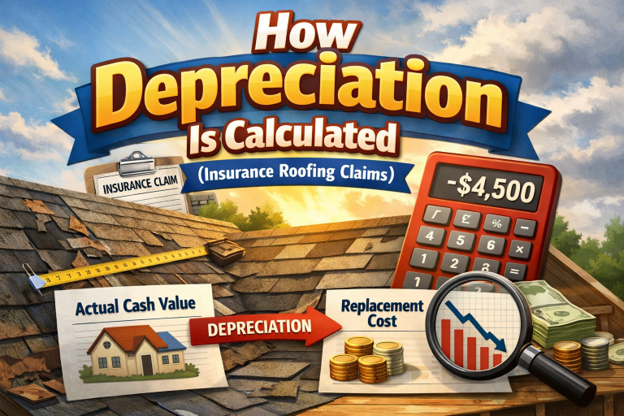
Insurance depreciation is meant to reflect age, wear and tear, and expected useful life of the item that was damaged. It is not arbitrary, but it is an estimate—and methods can vary by carrier.
Roof example (simple)
● Replacement cost (RCV): $20,000
● Expected roof life: 20 years
● Roof age: 10 years
Depreciation percentage:10 ÷ 20 = 50%
Depreciation amount:50% × $20,000 = $10,000
Actual Cash Value (ACV):$20,000 − $10,000 = $10,000
Why you often hear “5% per year”
Many carriers assume:
● Asphalt shingle roofs last 20–25 years
● That equals roughly 4–5% depreciation per year
Example:
● 5% per year × 10 years = 50% depreciation
This is an average, not a guarantee. Adjusters may adjust up or down based on condition.
Factors that affect depreciation
Insurance adjusters consider more than just age:
● Type of material (asphalt, tile, metal, wood shake)
● Expected lifespan of that material
● Actual condition before the loss
● Maintenance history
● Local climate exposure (hail, wind, sun)
● Building code upgrades (sometimes excluded from depreciation)
A well-maintained roof may receive less depreciation than its age alone would suggest.


Comments