

Proper Roof Ventilation in Colorado: Why It Matters

Most Homeowners Never Think About Roof Ventilation
When people think about roofing, they usually focus on:
● Shingles
● Storm damage
● Leaks
● Gutters
● Roof appearance
But one of the most important parts of a healthy roofing system is something most homeowners rarely see: ventilation.
Proper roof ventilation plays a major role in protecting your:
● Roof lifespan
● Energy efficiency
● Attic condition
● Indoor comfort
● Moisture control
In Colorado, ventilation becomes even more important because roofs experience extreme temperature swings throughout the year.
What Does Roof Ventilation Actually Do?
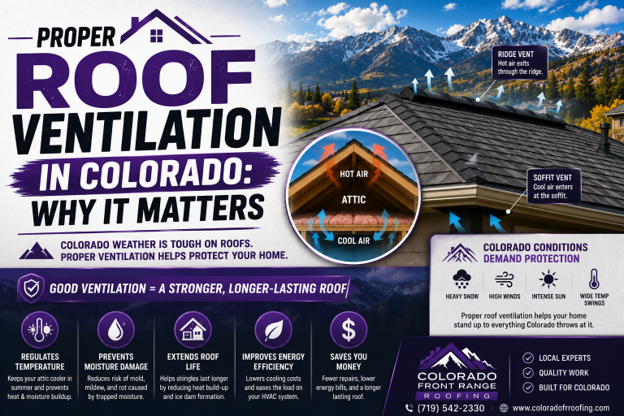
A roof ventilation system helps move air through the attic space.
A properly balanced system typically includes:
Intake Ventilation
Usually located near the soffits or lower roof edge, intake vents allow cooler outside air to enter the attic.
Exhaust Ventilation
Located near the ridge or upper roof sections, exhaust vents allow hot, moist air to escape.
Together, these systems help create continuous airflow through the attic.
Why Ventilation Matters in Colorado
Colorado homes deal with unique environmental conditions that can place enormous stress on roofing systems.
These include:
● Intense summer heat
● High UV exposure
● Heavy snow
● Freeze-thaw cycles
● Sudden temperature changes
● Ice dam risks
Without proper ventilation, heat and moisture can become trapped inside the attic, leading to several costly roofing problems.
Poor Ventilation Can Shorten Roof Lifespan
One of the biggest problems caused by poor ventilation is excessive attic heat.
During summer, attic temperatures can rise dramatically if airflow is restricted.
That trapped heat may cause shingles to:
● Age prematurely
● Curl
● Crack
● Lose granules faster
● Become brittle
Colorado’s high elevation and intense sun exposure can make this problem even worse.
A poorly ventilated attic can significantly reduce the lifespan of an otherwise high-quality roof.
Moisture Buildup Can Create Hidden Damage
Ventilation doesn’t just control heat — it also helps remove moisture.
Everyday household activities generate humidity, including:
● Cooking
● Showers
● Laundry
● Humidifiers
● Breathing
Without proper airflow, that moisture can accumulate inside the attic.
Over time, excess moisture may lead to:
● Mold growth
● Wood rot
● Wet insulation
● Structural damage
● Reduced insulation performance
Many homeowners never realize attic moisture problems exist until major damage appears.
Roof Ventilation Helps Prevent Ice Dams
Ice dams are a major concern during Colorado winters.
An ice dam forms when:
Heat escapes into the attic
Snow melts on the upper roof
Water refreezes near colder roof edges
This ice buildup can trap water beneath shingles and lead to:
● Roof leaks
● Interior water damage
● Gutter damage
● Shingle deterioration
Proper attic ventilation helps maintain more consistent roof temperatures, reducing the likelihood of ice dam formation.
Signs Your Roof May Have Ventilation Problems
Ventilation issues aren’t always obvious from the outside.
Common warning signs include:
● Extremely hot attic temperatures
● Uneven snow melt on the roof
● Ice dams during winter
● Curling shingles
● Premature roof aging
● Mold or mildew in the attic
● Moisture stains
● High energy bills
● Excessive indoor heat during summer
If multiple symptoms are present, it’s often worth scheduling a professional inspection.
Common Types of Roof Ventilation Systems
Several ventilation systems may be used depending on the roof design and home layout.
Ridge Vents
Installed along the roof peak, ridge vents allow rising hot air to escape naturally.
Soffit Vents
Located beneath roof overhangs, soffit vents provide intake airflow into the attic.
Box Vents
Also called static vents, these allow heat and moisture to exit through fixed roof openings.
Power Vents
Motorized systems that actively pull hot air from the attic.
Gable Vents
Installed on exterior attic walls to improve cross ventilation.
The best ventilation setup depends on the structure of the home and attic.
Balanced Ventilation Is Important
More ventilation is not always better.
A roofing system needs balanced airflow between:
● Intake vents
● Exhaust vents
Improperly balanced systems can sometimes create:
● Negative pressure
● Moisture trapping
● Reduced airflow efficiency
That’s why ventilation design should be carefully evaluated during roof replacement projects.
Ventilation Can Impact Energy Efficiency
A well-ventilated attic may help improve overall energy performance by reducing heat buildup during warmer months.
This can help:
● Lower cooling costs
● Improve indoor comfort
● Reduce strain on HVAC systems
While ventilation alone won’t solve all energy issues, it plays an important role in maintaining attic temperature control.
Roof Replacements Are the Perfect Time to Evaluate Ventilation
Many older homes have outdated or insufficient ventilation systems.
During roof replacement, contractors often inspect:
● Existing airflow
● Vent placement
● Insulation interaction
● Moisture conditions
● Intake-to-exhaust balance
In some cases, upgrading ventilation during reroofing can help improve long-term roof performance significantly.
Proper Ventilation Protects More Than Just Your Roof
Roof ventilation affects the entire home — not just the shingles.
A properly ventilated roofing system can help:
● Extend roof lifespan
● Reduce moisture problems
● Prevent ice dams
● Improve energy efficiency
● Protect attic structures
● Improve overall home comfort
If you’re concerned about attic heat, moisture issues, ice dams, or premature roof aging, Colorado Front Range Roofing can inspect your ventilation system and help determine whether improvements are needed for your home.


Comments