


How Long Do Roofs Really Last in Colorado?
- Shawn Carter

- Jul 28
- 4 min read
Why Roofs in Colorado Age Faster
One of the most common questions homeowners ask is:
“How long should my roof actually last in Colorado?”
The answer depends on several factors, but one thing is certain — Colorado weather is much harder on roofing systems than many homeowners realize.
At Colorado Front Range Roofing, we regularly inspect roofs throughout Pueblo and Colorado Springs that have aged much faster than national averages would suggest.
That’s because Colorado roofs face:
● Intense UV exposure
● Frequent hailstorms
● Heavy snow and ice
● Strong winds
● Rapid temperature swings
All of those conditions work together to shorten the lifespan of roofing materials over time.
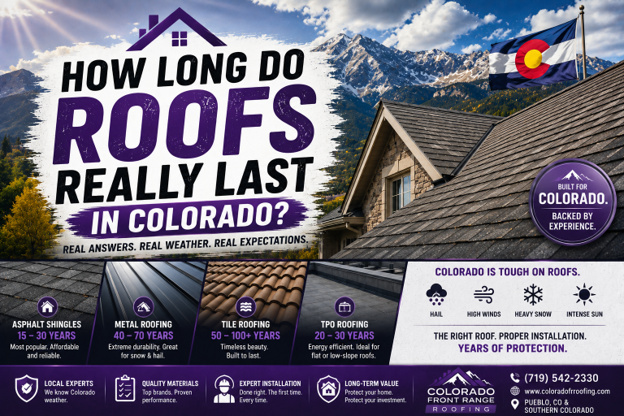
Average Roof Lifespans in Colorado
Asphalt Shingle Roofs
Asphalt shingles are the most common roofing material in Colorado.
Typical lifespan ranges include:
● 3-tab shingles: approximately 12–18 years
● Architectural shingles: approximately 18–25 years
● Impact-resistant shingles: often similar lifespan, but better hail performance
While many manufacturers advertise “30-year shingles,” real-world Colorado conditions often reduce that practical lifespan.
Hail damage, UV exposure, and wind are usually the biggest reasons shingles wear out early.
Metal Roofing
Metal roofing systems generally last much longer than asphalt shingles.
Typical Colorado lifespan estimates include:
● Standing seam metal roofing: 40–60+ years
● Stone-coated steel roofing: 30–50 years
Metal roofs perform especially well in areas with:
● Heavy snow
● High winds
● Frequent hailstorms
Although severe hail can sometimes dent metal panels, properly installed systems often remain structurally sound for decades.
Concrete and Clay Tile Roofs
Tile roofing systems are known for durability and longevity.
Typical lifespan ranges include:
● Concrete tile: 40–60+ years
● Clay tile: 50+ years with proper maintenance
However, many homeowners don’t realize the underlayment beneath the tile may need replacement long before the tiles themselves wear out.
In Colorado, tile underlayment commonly lasts around 25–35 years depending on climate conditions and installation quality.
Flat and Low-Slope Roofing Systems
Flat roofing materials vary widely in lifespan.
Common estimates include:
● Modified bitumen roofing: 15–25 years
● TPO roofing: 20–30 years
● PVC roofing: 20–30 years
● EPDM rubber roofing: 20–30 years
Flat roofs are especially sensitive to:
● Ponding water
● UV exposure
● Drainage problems
● Debris buildup
Routine inspections are extremely important for extending flat roof lifespan.
How Colorado Climate Affects Roof Longevity
High Altitude UV Exposure
Colorado’s elevation means stronger sunlight and more UV radiation.
Over time, UV exposure can:
● Dry out shingles
● Cause cracking
● Accelerate granule loss
● Reduce flexibility in roofing materials
South-facing roof slopes often show wear first because they receive the most direct sunlight.
Hailstorms
Hail is one of the biggest factors affecting Colorado roof lifespan.
Even when a roof doesn’t leak immediately, hail impacts can weaken materials and shorten overall service life.
Repeated storms over several years often accelerate deterioration significantly.
Wind Damage
Strong Colorado winds can:
● Lift shingles
● Break sealant bonds
● Loosen flashing
● Expose vulnerable edges
Wind damage often starts small but worsens over time if not repaired quickly.
Snow and Ice
Winter weather creates additional roofing stress through:
● Snow load
● Ice dams
● Freeze-thaw cycles
● Moisture intrusion
Poor ventilation and insulation can make winter roof problems even worse.
Signs Your Roof May Be Near the End of Its Lifespan
At Colorado Front Range Roofing, we often recommend homeowners schedule an inspection if they notice:
● Granules collecting heavily in gutters
● Curling or cracked shingles
● Missing shingles after windstorms
● Frequent roof leaks
● Ceiling stains or attic moisture
● Visible sagging areas
● Bald or shiny shingle spots
● Widespread hail bruising
● Roof age approaching 20 years or more
Many roofing systems show subtle warning signs long before major leaks develop.
How to Make Your Roof Last Longer in Colorado
While Colorado weather is tough, proper maintenance can extend roof life significantly.
Choose Materials Built for Colorado Weather
Impact-resistant shingles and durable roofing systems often perform better long-term in hail-prone areas.
Keep Gutters and Roof Areas Clear
Debris buildup traps moisture and can create drainage problems that accelerate wear.
Schedule Regular Roof Inspections
Annual inspections — especially after major storms — help identify:
● Loose shingles
● Flashing issues
● Early hail damage
● Minor leaks
● Drainage problems
Catching issues early often prevents larger repairs later.
Maintain Proper Ventilation
Good attic ventilation helps reduce:
● Heat buildup
● Moisture accumulation
● Ice dams
● Premature shingle aging
Ventilation is one of the most overlooked factors in roof longevity.
Final Thoughts
Roof lifespan in Colorado depends on much more than the manufacturer’s label.
Weather exposure, installation quality, ventilation, maintenance, and storm history all play major roles in how long a roof truly lasts.
At Colorado Front Range Roofing, we help homeowners throughout Pueblo and Colorado Springs evaluate roof condition honestly and understand when repairs still make sense — and when replacement is the smarter long-term investment.
If you’re unsure how much life your roof has left, we’re happy to inspect it and give you straightforward recommendations based on your roof, your neighborhood, and Colorado’s climate conditions.
Contact us here:


Comments