


How Colorado Hail Damages Roofs: What Adjusters Are Looking For
- Shawn Carter

- Jul 28
- 4 min read
Why Hail Damage Is a Major Issue in Colorado
Colorado experiences some of the most severe hailstorms in the country. Between Pueblo, Colorado Springs, and much of the Front Range, homeowners regularly deal with storms capable of damaging roofing systems in just minutes.
The challenge is that hail damage isn’t always obvious from the ground.
Some roofing problems appear immediately, while others slowly develop over time through:
● Leaks
● Granule loss
● Weakening shingles
● Moisture intrusion
● Reduced roof lifespan
That’s why insurance adjusters and roofing contractors carefully inspect roofs after major storms to identify both visible and hidden damage.
What Insurance Adjusters Actually Look For
When an insurance adjuster inspects a roof after a hailstorm, they’re typically trying to determine:
● Whether the damage was caused by hail
● How severe the damage is
● Whether repairs or replacement are justified
● The extent of affected areas
● Whether other exterior components were damaged too
Their inspection often includes much more than just the shingles themselves.
Common Signs of Hail Damage on Asphalt Shingles
Asphalt shingles are one of the most common roofing materials affected by hail.
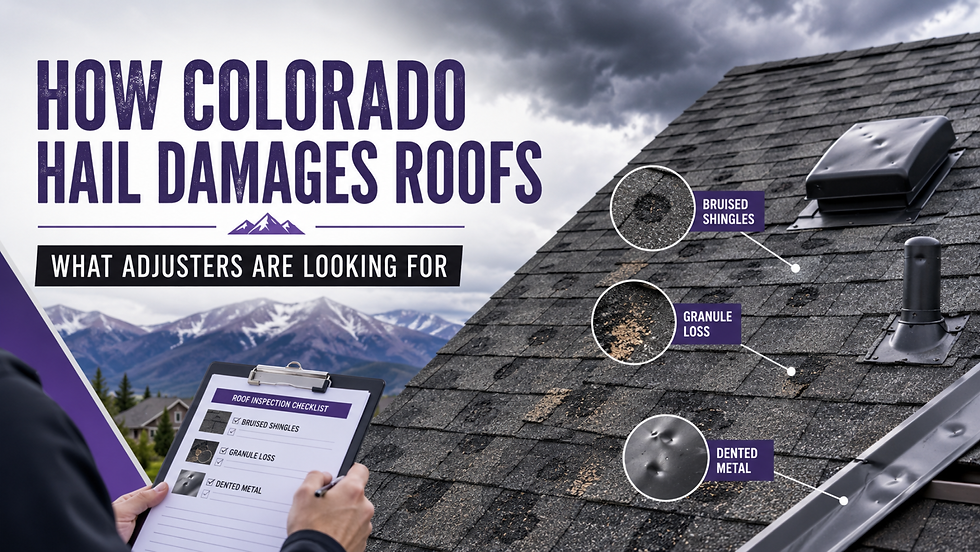
Granule Loss
One of the clearest signs of hail impact is missing granules.
Granules protect shingles from:
● UV exposure
● Water penetration
● Premature aging
After hail impact, shingles may show dark spots where granules were knocked away.
Bruising
Adjusters often check for “bruising,” which occurs when hail softens or damages the asphalt layer beneath the surface.
Bruised areas may feel:
● Soft
● Spongy
● Depressed under pressure
These weak points can eventually lead to cracking or leaks.
Cracked or Split Shingles
Larger hailstones may crack shingles directly, especially on older roofs that have become brittle over time.
Why Roof Age Matters During Inspections
Older roofs often react differently to hail than newer systems.
As shingles age, they lose flexibility due to:
● UV exposure
● Temperature swings
● Weathering
● Granule deterioration
This makes older shingles more vulnerable to cracking and damage during storms.
Adjusters may consider:
● Roof age
● Existing wear
● Previous repairs
● Material condition
when evaluating a claim.
Hail Damage Isn’t Always Limited to Shingles
A professional storm inspection usually includes multiple parts of the exterior.
Adjusters commonly inspect:
● Gutters
● Downspouts
● Roof vents
● Flashing
● Siding
● Window screens
● Soft metals
● Air conditioning units
Damage to these areas can help confirm the size and direction of hail during the storm.
Why “Soft Metal Damage” Matters
Soft metals are often one of the easiest ways to identify hail impact.
This includes materials like:
● Gutters
● Metal flashing
● Roof vents
● Downspouts
Unlike shingles, soft metals dent easily during hailstorms.
Adjusters frequently use these dents as supporting evidence that hail damage occurred across the property.
Wind Can Make Hail Damage Worse
Many Colorado storms involve both hail and high winds.
Strong wind gusts may:
● Lift shingles
● Break seals
● Expose underlayment
● Tear roofing materials loose
When hail and wind combine, roofs can suffer more extensive damage than homeowners initially realize.
Hidden Damage Can Develop Slowly
Not all hail damage creates immediate leaks.
Sometimes roofing materials weaken gradually after impact.
Over time, homeowners may begin noticing:
● Water stains on ceilings
● Granules collecting in gutters
● Curling shingles
● Increased roof leaks
● Premature aging
By the time these symptoms appear, the roof may already require significant repairs.
That’s why inspections after severe storms are so important — even if the roof “looks fine” from the ground.
What Happens During a Roof Inspection?
A roofing inspection after hail typically includes:
Exterior Roof Evaluation
The inspector checks for:
● Impact marks
● Missing granules
● Cracking
● Lifted shingles
● Exposed fiberglass matting
Attic Inspection
The attic may reveal signs of hidden moisture or ventilation problems.
Exterior Property Review
Contractors and adjusters often examine:
● Siding
● Gutters
● Flashing
● Fences
● Outdoor equipment
to help document overall storm impact.
Should You File an Insurance Claim?
Not every hailstorm automatically justifies filing a claim.
However, homeowners should strongly consider an inspection if:
● Large hail recently hit the area
● Neighbors are replacing roofs
● You notice visible roof damage
● Your roof is older
● Leaks develop after a storm
Filing a claim without proper documentation can sometimes create unnecessary complications, so many homeowners choose to have a roofing contractor inspect the property first.
Why Professional Documentation Matters
Proper documentation can make a major difference during the insurance process.
Experienced roofing contractors often help homeowners by:
● Photographing damage
● Identifying affected areas
● Explaining code requirements
● Meeting with adjusters
● Providing repair estimates
Having an experienced storm damage specialist involved can help ensure important damage isn’t overlooked.
Colorado Storms Can Shorten Roof Lifespans Quickly
Even moderate hailstorms can weaken roofing systems long before major leaks appear.
Addressing damage early may help:
● Prevent moisture intrusion
● Reduce future repair costs
● Maintain insurance compliance
● Extend roof lifespan
● Protect property value
If your home was recently hit by hail or severe wind, Colorado Front Range Roofing can provide a professional inspection and help you better understand the condition of your roof and exterior systems.



Comments